2026 speakers SCS Woudschoten meeting

2026 Speakers
Victorita Dolean is a Full Professor in the Department of Mathematics and Computer Science at Eindhoven University of Technology and Visiting Professor at the University of Strathclyde (UK). Her research focuses on the design and analysis of scalable domain decomposition methods for large-scale PDE problems. She is known for having co-authored a widely used monograph on these methods. Her work spans both the mathematical foundations and high-performance implementation, with particular emphasis on wave propagation and strongly heterogeneous problems. More broadly, her research explores how domain decomposition ideas can be extended and adapted to emerging computational paradigms. An example is the integration of Scientific Machine Learning with classical iterative solvers, where learning components are designed to preserve scalability and robustness mirroring concepts from domain decomposition.
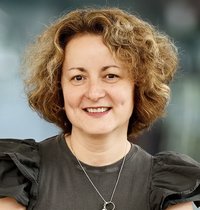
Svetlana Dubinkina is an Associate Professor at the Mathematics department at the VU Amsterdam and a co-director of the Amsterdam Center for Dynamics and Computation. Her research focus on data assimilation with application from climate science to neuroscience. She develops numerical methods for accurate and efficient estimates for high-dimensional problems. Her recent research interest lies in establishing both a mathematical foundation and a computational framework for Bayesian inverse problems in neuroscience.
Vandana Dwarka is an Assistant Professor of Mathematics at Delft University of Technology. Trained in law, mathematics, and econometrics, she brings a rare combination of expertise, with prior experience at the Dutch Ministry of Finance, Deloitte, Ernst & Young, and J. P. Morgan. Her current research focuses on developing rigorous and scalable numerical methods for complex physics simulations, with applications in plasma fusion simulations, climate-related wave dynamics, and energy-efficient computing. During her doctoral work from 2018 to 2022, she worked on Helmholtz solvers and developed the first scalable solver with wavenumber independent convergence. The resulting thesis was nominated for the KWG PhD Prize of the Royal Dutch Mathematical Society. Since 2020, she has pioneered Mathematical Validation of AI as a research and practice-oriented direction, where mathematics must be combined with interdisciplinary expertise and practical experience to translate first principles into algorithmic accountability and regulatory compliance for high-risk AI systems. She has published articles in leading Dutch newspapers on these matters, which were referenced in the Dutch parliamentary debate on AI regulation. In 2026, she was elected as a member of the Young Academy of the Royal Netherlands Academy of Arts and Sciences.
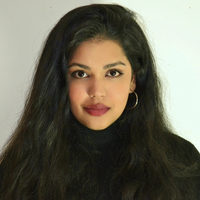
Silke Glas received her PhD from Ulm University on numerical analysis in 2018 and subsequently held a postdoctoral position at Cornell University. Since 2022, she has been with the University of Twente, where she is now an associate professor in the Department of Applied Mathematics working on her research line of nonlinear and structure-preserving MOR. Her current work focuses on the differential geometric formulation of model reduction and structure-preserving model of (port-)Hamiltonian systems.
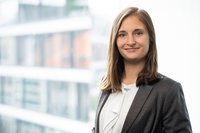
Daan Huybrechs is currently the program director of the Master of Mathematical Engineering at KU Leuven, Belgium, and is a member of the NUMA research section. His main research interests include numerical methods for wave propagation and computational function approximation. He co-authored the SIAM book “Evaluating highly oscillatory integrals”. Specific wave topics include fast solvers for boundary element methods and methods for high-frequency problems. In approximation theory, the main focus lies on multivariate rational approximation and approximation with Fourier extensions and frames.
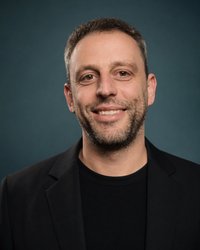
Vanja Nikolić is an Associate Professor in the Applied Mathematics group at Radboud University. She earned her PhD in 2015 from the University of Klagenfurt in Austria and served as a Postdoctoral Researcher at the Technical University of Munich until 2019. Her research focuses on PDE modeling and numerical analysis of nonlinear wave phenomena, with particular emphasis on the mathematical aspects of nonlinear acoustics and on the use of analytical and computational tools to advance modern ultrasound technologies.
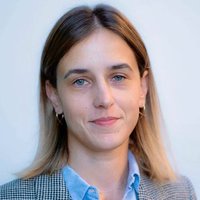
Prof. Cornelis Oosterlee holds the chair in financial mathematics at the Mathematical Institute of Utrecht University, where he is currently also the Head of the department. He is a 2024 SIAM Fellow; Co-author of two books ("Multigrid" 2001, and "Mathematical Modeling and Computation in Finance", 2019); Methods he co-developed include: the COS method, SWIFT (Shannon Wavelet Inverse Fourier Transform method) , SGBM (Stochastic Grid Bundling Method), SCMC (Stochastic Collocation Monte Carlo Method), and the Seven-League scheme (7L).
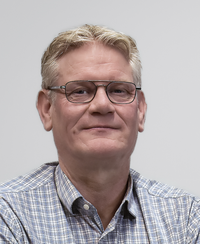
Sorin Pop graduated in Informatics from the "Babes-Bolyai" University, Cluj Napoca. He received a PhD in mathematical analysis from the same university, after being a DAAD fellow at the Interdisciplinary Centre for Scientific Computing, University of Heidelberg. He was a postdoctoral researcher at the Centrum Wiskunde & Informatica (CWI) in Amsterdam, and then moved to the Eindhoven University of Technology. For several years, he was part-time professor in Computational Mathematics at the University of Bergen (Norway). In 2016 he became a professor at Hasselt University, where he is chair of the research group Computational Mathematics, and of the Doctoral School Science & Technology.
Sorin works in mathematical and numerical analysis, or multi-scale methods/homogenisation for (systems of) nonlinear partial differential equations. The problems he is addressing are related especially to flow and reactive transport in porous media, and have applications in environmental engineering (subsurface flow, salt precipitation and dissolution), biosystems (biofilms, tissues), or technology (batteries). He received several distinctions, fellowships and grants. He serves in the editorial boards of several scientific journals, like Applied Mathematics Letters, or Computational Geosciences. He was involved in various professional organisations, like SIAM (vice-chair and program director of the Activity Group Geosciences) and InterPore (chair of the InterPore BeNeLux National Chapter) He was (co-)chair of different conferences, like the 2015 and 2019 editions of the SIAM Mathematical and Computational Issues in the Geosciences, or the 2021 edition of the Woudschoten Conference.
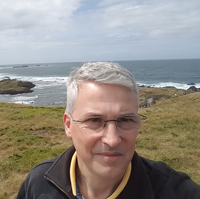
Benjamin Sanderse is heading the Scientific Computing group at CWI in Amsterdam. He develops new methods that combine physical modelling and data-driven techniques, with as main application turbulent fluid flows. For this purpose, he combines several disciplines such as scientific and generative machine learning (SciML), reduced-order modeling, data assimilation, and uncertainty quantification.
Sanderse obtained his PhD degree cum laude from Eindhoven University of Technology (2013) and was awarded the Stieltjes prize for best PhD thesis in mathematics in the Netherlands. He has been awarded ERC Consolidator (PI), NWO Vidi (PI) and NWO XL (co-PI) grants. He became group leader at CWI in 2021 and is part-time affiliated as associate professor to Eindhoven University of Technology since 2023.
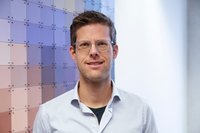
Rob Stevenson has been a Full Professor in Applied Analysis at the University of Amsterdam since 2007. He earned his PhD from Utrecht University in 1990, followed by several postdoctoral positions and a tenure in the software industry. He returned to Utrecht University in 1999 as an Associate Professor before joining UvA. His primary research focuses on multigrid methods, wavelets, and the optimal convergence of adaptive methods.
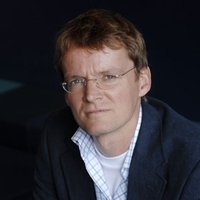
Michèle Vanmaele is a full Professor in Applied Mathematics at Ghent University, Belgium in the Department of Mathematics, Computer Science and Statistics. She obtained her PhD in mathematics at Ghent University and held a postdoctoral research position in the Numerical Analysis Group of the University of Oxford. Her research in the area of mathematical and computational finance focuses on modelling, pricing and hedging of derivatives in financial and energy markets and on risk management of life-insurance products. Since 2011, she is coordinator of an FWO scientific research network on Modelling and Simulation with applications in Finance, Insurance and Economics.
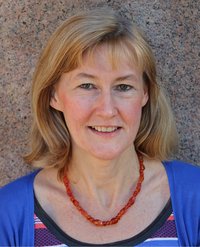
Wim Vanroose is professor in Applied Mathematics at the University of Antwerp, Belgium, where he develops efficient, scalable mathematical and numerical tools to study complex systems across both the exact and applied sciences. His specialties include solvers for large-scale systems, mathematical modelling of dynamics and complex interactions, and high-performance simulation and optimisation software built for many-core and parallel hardware.
He is co-founder of Motulus, which provides planning software for the airline industry, and of Polygonal, which developed shape-optimisation algorithms for the textile industry.
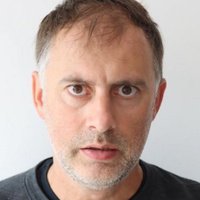
Roel Verstappen is a full professor of Computational Mathematics at the University of Groningen. He obtained his PhD from the University of Twente in 1989 and subsequently joined the University of Groningen, where he advanced through the academic ranks. His research focuses on the fundamental principles of Computational Fluid Dynamics, with particular emphasis on the numerical simulation of turbulence.
After 22 years of employment as a professor in numerical analysis, first with the TUD and then with the UU, I am since my retirement in 2006 full time involved in graphical design and paper folding.
With paper folding, I am mainly interested in the design of 3-D paper sculptures and the combination with (my) graphical designs. The basic folding techniques used, are more widely known as geometric and modular folding.
https://www.henkvandervorst.nl/